Book 2 Lesson 2 — mikangin (Typhoon is Coming)
mikangin | Typhoon is coming
The typhoon came. Masaray (Ma) and Sompo (So) listened to the Orchid Island radio station to hear updates about the typhoon, and asked their mother (In) whether she had prepared candles and flashlights.
Readings
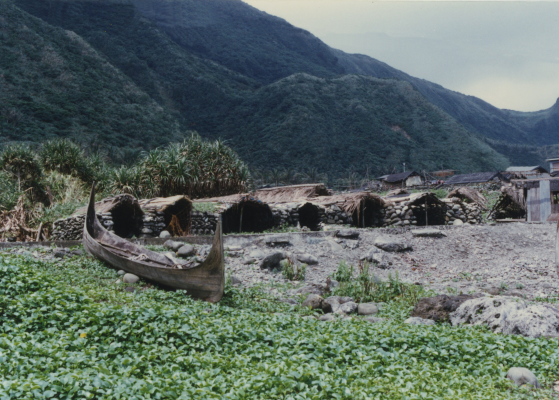
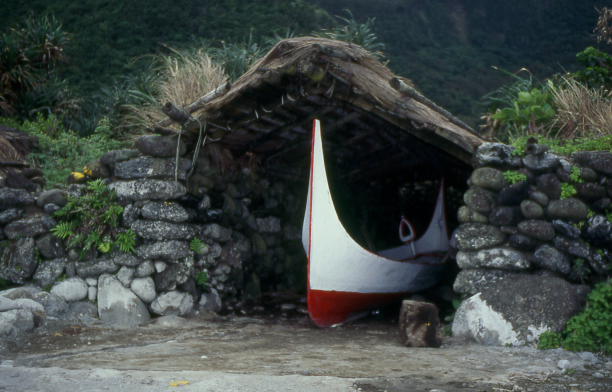
Good morning, folks. I hereby warn all residents that the weather is not good (there is a typhoon). Everyone should pull their boats into their boathouses so that they will not be washed away. Also, strengthen your houses so they are not blown away by strong winds. When going to the seaside, watch out for big waves to avoid danger. That is the end of this broadcast.
Oh, the giant waves breaking against the rocks are so high and beautiful.
Mom, do you have candles and a flashlight?
What do you want to do?
Just in case the power goes out tonight, so we’ll have something ready.
No, could you go out and buy some?
This is a road report. The tunnel road has been flooded by seawater and cannot be used. Also, the hillside at Tiger Head Hill has collapsed and covered the road. Please do not go to these two areas, as it is dangerous. This is the end of the broadcast.
The water is muddy. What do we do?
Let’s get some buckets to catch the rainwater from the gutters, to use for washing hands and dishes.
Uh oh, the power went out. Light the candles!
Grammar | mikangin (Typhoon Is Coming)
(1) Serial verb constructions
A “serial verb construction” consists of two or more verbs connected by the linker a, sharing the same subject noun phrase. In Examples (1) and (2), the shared subject is o tatala nio “your boats.” In Example (1), both verbs are transitive and take the suffix -en. In Example (2), one verb is intransitive with the prefix ma-, while the other is transitive with the prefix i-.
In Example (3), because the subject noun phrase follows the verb ka-pakapia “then strengthen…,” it is demoted to the oblique case: o vahay nio → so vahay nio. However, the following verb remains transitive with the suffix -en.
2. ma-nginanawa o tatalo nio a i-ziod no wawa. “Otherwise your boats will be in danger and be washed away.”
3. ka-pakapia nio so vahay nio a amamaot-en. “In particular, strengthen your houses.”
(2) Transitive verb affixes: -en, -an, i-
The three primary transitive affixes -en, -an, and i- correspond broadly to patient, locative, and instrument roles in many Austronesian languages. Here they are analyzed as transitive verb markers to better reflect the structure of Yami.
Suffix -en: an incomplete action whose complement is the patient, usually directly and fully affected.
5. aziman-en nio o wawa. “You should pay attention to the waves.”
Example (6) is a relative clause. The noun phrase [rako a wawa] is modified by [na pa-sibsiblak-en do igang]. Restored to canonical order, the structure is na pasibsiblaken o rako a wawa do igang “The giant waves break upon the rocks.” In Example (7), when the perfective prefix ni- occurs, the suffix -en is obligatorily omitted, showing a complementary distribution.
7. na ni-asap no wawa o rarahan Jikarahem. “The road to Jikarahem is flooded by seawater.”
Suffix -an: its complement typically indicates a location. It may co-occur with ni-, and the affectedness of the patient is partial or indirect.
9. rarahan do Jizakazang am, ya na ni-tapino-an no tana no token. “At Tiger Head Hill, the mountain soil has collapsed and covered the road.”
Prefix i-: “to move or transfer something.” The complement is the object being moved or transferred.
11. o ri rana o ya ko i-panci. “That is the end of the broadcast.”
The prefix i- also marks instruments, as in Example (12), where y-avat refers to tools prepared for possible use (candles and flashlights).
(3) Verb inflection
This section discusses three types of inflected verbs. In Example (13), the imperative form of a transitive verb takes the suffix -i. Examples (14)–(15) show the inflected form of intransitive verbs following the auxiliaries to (including toda) and ji. Example (16) illustrates an inflected kaji- verb preceded by ji. The p in paka-song becomes the bilabial nasal m through nasal assimilation, and makasong takes the locative suffix -an.
Note that the nominative noun phrase following a ka- verb is downgraded to the oblique form sia (from so sia), and the second transitive verb pangonongan “to go past” refers to the tunnel road.
14. y-avat si toda hesep o apoy simahep. “Prepare candles and flashlights in case the power goes out.”
15. ji kamo angay do ya mikadoa rarahan ori. “Do not try to go on those two roads, folks.”
16. ya kaji makasong-an sia a pangonongan. “As a result, the road in front of the tunnel is impassable.”
Demonstrate | mikangin (Typhoon Is Coming)
(1) Role play — Preparing for a typhoon
Let two students perform the dialogues in this lesson (preparing for a typhoon).
A: ya kmi maráhet o kakawan, ya kmi ya mikeykángin.
The weather seems to be bad. There seems to be a typhoon.
B: apia o tatala namen ang?
What should we do about our boat?
A: pasdepen nio o tatala nio do kamalig, ta to na ziodan no wawa.
Please pull your boats into your boathouses so they won’t be washed away.
A: ya kmi maráhet o kakawan, ya kmi ya mikeykángin.
The weather seems to be bad. There seems to be a typhoon.
B: kóngoen namen so wajin o vahay namen?
What should we do about our house?
A: amamaoten nio o vahay nio, ta to na napoata no angin.
Please strengthen your houses so they won’t be blown away by the strong winds.
A: ya kmi maráhet o kakawan, ya kmi ya mikeykángin.
The weather seems to be bad. There seems to be a typhoon.
B: apia o kangay namen do ttaw?
May we go to the seashore?
A: si mangay kamo do ttaw am, azimanen nio o wawa, ta manginanawa kamo.
If you go to the seaside, watch out for the big waves to avoid danger.
A: ya kmi maráhet o kakawan, ya kmi ya mikeykángin.
The weather seems to be bad. There seems to be a typhoon.
B: ikongo o sazangan namen a yavat si toda hesep o zampo?
If the power goes out, what should we buy to prepare for it?
A: manazang kamo so taro a ka no dingki.
Buy candles and flashlights.
A: ya kmi maráhet o kakawan, ya kmi ya mikeykángin.
The weather seems to be bad. There seems to be a typhoon.
B: si maparek o ranom am, makong so wajin?
If the water is muddy, what should we do?
A: mapataza kamo so simingki do tozan tehed, ta pavanawan am, piveraveran.
Get some buckets to catch the rainwater from the gutters for washing hands and dishes.
(2) Weather report imitation — Replace place names
Ask students to imitate the road-and-weather reports from the lesson but replace the underlined place names with other locations in Lanyu.
o ya ko ipánci manga keypong am, na niasap no wawa o rarahan Jikarahem, ya kají makasongan sia a pangonongan; o rarahan do Jizakazang am, ya na nitapinoan no tana no tokon, ji kámo angay do ya mikadoa rarahan ori, ta manginanawa kamo an, o ri rana ya ko ipanci.
“This is a road report. The road in front of the tunnel is flooded and cannot be used. Also, there are mudslides around Tiger Head Hill, so folks should not use these two roads. This is the end of the broadcast.”
Map of Lanyu: https://www.lanyu.gov.tw/userfiles/images/travel_5map_b.jpg
Place names
Jikavocidan — green grassland
Jiarai — nuclear waste port
Jimamanok — chicken rock
Jiahaod — warship island
Jirakoayo — Jirakoayo stream
seyseykedan no sikoki — airport
Jikatapan — Jikatapan mountain
Examples
ya mangneb o seyseykedan no sikoki. “The airport is closed.”
ya ni-mapoas o tokon Jikatapan. “The mountain behind Jikatapan has collapsed.”
Exercise | mikangin (Typhoon Is Coming)
(1) Reading aloud & recording
Ask students to practice reading aloud the weather forecast examples provided in this lesson, so they become familiar with the style and rhythm of weather reporting. Students should record their best reading and submit it to the teacher for evaluation.
• Stress and lengthening (e.g., mikadey, mavalang)
• Smooth connected reading and pauses
• Correct pronunciation of place names (e.g., Jikarahem, Jizakazang)
• Natural weather-report intonation and pacing
(2) Writing practice — Typhoon news on Lanyu
Ask students to collect one news report about a typhoon striking Lanyu (including a picture), and write a paragraph or two (about 8–10 sentences) describing the disaster and its impact.
• Time and location
• Wind and rain conditions
• Damage to houses, boats, or roads
• Situation of power, communication, or transportation
• Impacts on school or fishing activities
• Recovery efforts and safety reminders
(3) Script writing — Preparing for a typhoon
Ask students to write a short script (1–2 pages) for a classroom role-play on typhoon preparation. The script should include at least the following scenes: reinforcing the boathouse/house, safety at the seaside, emergency supplies (candles/flashlights), and water collection for daily use.
• Characters and setting
• Dialogues (may include a narrator)
• Stage directions (e.g., (sound of heavy rain and thunder))